
Authored by Sam Collard and Natasia Kalajdziovski
In recent weeks, Greenland has been thrust into the geopolitical spotlight after US President Donald Trump revived his interest in gaining control of the semi-autonomous Danish territory. That real-world controversy has created ideal conditions for information manipulation: we have seen exactly that, with the Kremlin’s influence machinery moving quickly to react.
Looking at data running from 01 January 2026 to 27 January 2026, SecAlliance has analysed several instances of covert influence operations that we have attributed, with high confidence, to the Russian state. The findings demonstrate a concerted effort to show the NATO alliance as weak, sow distrust in fact-checking organisations and Western news outlets and, among other things, portray Europe as aggressive, disjointed and unstable.
On 13 January 2026, clusters of bot-like social media accounts began circulating claims that the investigative outlet Bellingcat had reported the armed forces of Germany were developing war scenarios for Greenland. A video accompanying the posts falsely attributed statements to Bellingcat founder Eliot Higgins, alleging he had said Ukraine should urgently sign a peace agreement because Western military attention would soon shift to a confrontation in Greenland [source].
No such report exists, and Higgins didn’t make these comments. Russian disinformation frequently targets fact-checkers like Bellingcat to pre-emptively undermine credibility. By portraying investigators as biased, foreign-controlled, or corrupt, the Kremlin seeks to discredit evidence before it spreads. The aim isn’t rebuttal, but erosion of trust, confusion, and deterrence of future scrutiny.
The intended effect of the disinformation is twofold: to amplify fears of looming conflict within NATO and to imply that Western support for Ukraine is temporary and fragile.
Between 15-19 January 2026, coordinated posts on X and pro-Russian Telegram channels circulated a video bearing BBC branding. The clip claimed Ukrainian President Volodymyr Zelensky had concluded a secret agreement with Germany and France to deploy 5,000–10,000 Ukrainian soldiers, without insignia, to Greenland to confront the US. The video again falsely attributed Bellingcat as the investigative source behind the story [source][source][source].
This was a complete fabrication. No such BBC video appeared on the broadcaster’s official channels or social media accounts. The production relied on forged branding and professional style editing to create the illusion of authenticity. The narrative sought to portray Ukraine as recklessly entangling itself in Arctic militarisation while seeking to exacerbate tensions within NATO.
On 17 January 2026, a pro-Russian Telegram channel distributed a video presented as a report from Denmark’s TV2 Nord. In the altered broadcast, presenter Pia Beltorf allegedly announced that Denmark planned to withdraw F-16 fighter jets previously transferred to Ukraine and redeploy them to Greenland in response to Trump’s statements [source]. The claim was swiftly amplified by posts on X, and VK (Russia’s largest online social media platform) and articles across the Russian state-aligned Pravda network, which is widely known for its dissemination of disinformation [source][source][source][source].
No such policy announcement appeared on the TV2 Nord official platforms, nor did Denmark’s Ministry of Defence issue any corresponding statement. In reality, the video used an authentic TV2 Nord segment, and its audio had been replaced it with a fabricated narration. The fake circulated in multiple languages, indicating a coordinated cross-platform operation. The objective of this campaign was likely to suggest Western allies were abandoning Ukraine in favour of self-interested military repositioning, undermining confidence in long-term Western military assistance.

Fig 1, 2, and 3. Examples of the posts featuring the fake Bellingcat, BBC and TV2 Nord videos.
On 19 January 2026, clusters of bot-like social media accounts circulated posts claiming that Ukrainian refugees had staged coordinated protests across Europe and the US against Donald Trump’s alleged intention to attack Greenland. The posts were accompanied by a fabricated video bearing the branding of Euronews, lending the appearance of a legitimate international news report [source].
The fake video asserted that protesters had burned portraits of Trump and US flags, called for Trump’s assassination, and that Ukrainian’s possessed an “unhealthy fixation on wishing death upon others.” The video concluded by alleging that more than 400 arrests had occurred in US cities, while claiming that no arrests were made in Europe despite supposedly more aggressive protest activity.
No such Euronews report exists, and no credible media or law enforcement sources reported protests of this nature.
More broadly, the narrative aims to stigmatise Ukrainian refugees by casting them as a source of disorder in Western countries, while amplifying anxieties around the US–NATO dispute over Greenland. In parallel, the contrast drawn between alleged events in Europe and the United States feeds into longstanding Kremlin narratives depicting European governments as unwilling or unable to enforce public order, thereby presenting Western political systems as fragile in comparison to Russia’s projected image of control and strength
On 19 January 2026, clusters of bot-like social media accounts circulated another fabricated video falsely claiming to originate from the Institute for the Study of War (ISW). The video featured forged ISW branding and asserted that American strategist and author Edward Luttwak had stated that “If Europe had sided with Ukraine in 2022, it would not have lost either money or Greenland in 2026” [source][source]. No such video was published by ISW, and Luttwak has made no public statement of this kind.

Fig 4 and 5. Examples of the posts featuring the fake ISW and Euronews videos.
Between 21-27 January 2026, pro-Russian Telegram channels circulated fake covers of the French satirical magazine Charlie Hebdo featuring fabricated illustrations linked to Greenland. One fake cover depicted Ukrainian President Volodymyr Zelensky, portrayed in a deliberately degrading, drug-addicted caricature dreaming of US President Donald Trump telling him that he had “extracted all of Greenland’s oil” to give it to Ukraine. Another fake cover showed Zelensky deploying Ukrainian troops to Greenland and a third showed President Emmanuel Macron deploying “French war frogs” to defend Greenland from the US [source][source][source]. None of these covers were published by Charlie Hebdo.
These fake Charlie Hebdo covers are nothing new – the editorial team at Charlie Hebdo have filed a counterfeiting complaint in a French court because of the number of fake pro-Kremlin covers that have been shared online since the 2022 Russian invasion of Ukraine [source]. These fakes almost always originate in pro-Russian Telegram channels before being disseminated on mainstream social media and through Russian’s Pravda network.

Fig 6, 7, and 8. Fake Charlie Hebdo covers.
Coming into World Economic Forum (Davos) 2026, global leaders anticipated that the simmering Greenland crisis would dominate discussions. With Trump pushing for US control of the semi-autonomous Danish territory and threatening tariffs if Europe resisted, many expected sharp clashes and high-stakes diplomacy on sovereignty, NATO obligations, and Arctic security. European leaders were poised to defend Greenland’s status and transatlantic unity, while analysts forecast that the issue could either escalate tensions or force a diplomatic de-escalation. Ultimately, Davos was seen as a critical moment to steer the dispute away from coercion toward negotiated talks, testing the resilience of Western alliances.
Not only this – it was seen as an opportunity for the Kremlin to covertly wade into the Greenland narrative to sow chaos, division, and confusion, all in the effort of pushing its own geopolitical objectives.
When looking at the month of January, it is possible to see just how significant the reach of disinformation was on mainstream social media*. Over this period, SecAlliance observed a total reach of 3.03 million, averaging about 101k reach on a daily basis, with the United States and Russia seeing the highest volume from a geographic standpoint. Unsurprisingly, the peak reach was observed on 18-19 January 2026, the day before the opening of Davos and its opening day. However, total engagement with these posts was only 12.8k (mostly likes and reshares), again with the highest engagement around the opening day of Davos.
(*These numbers do not include Telegram.)
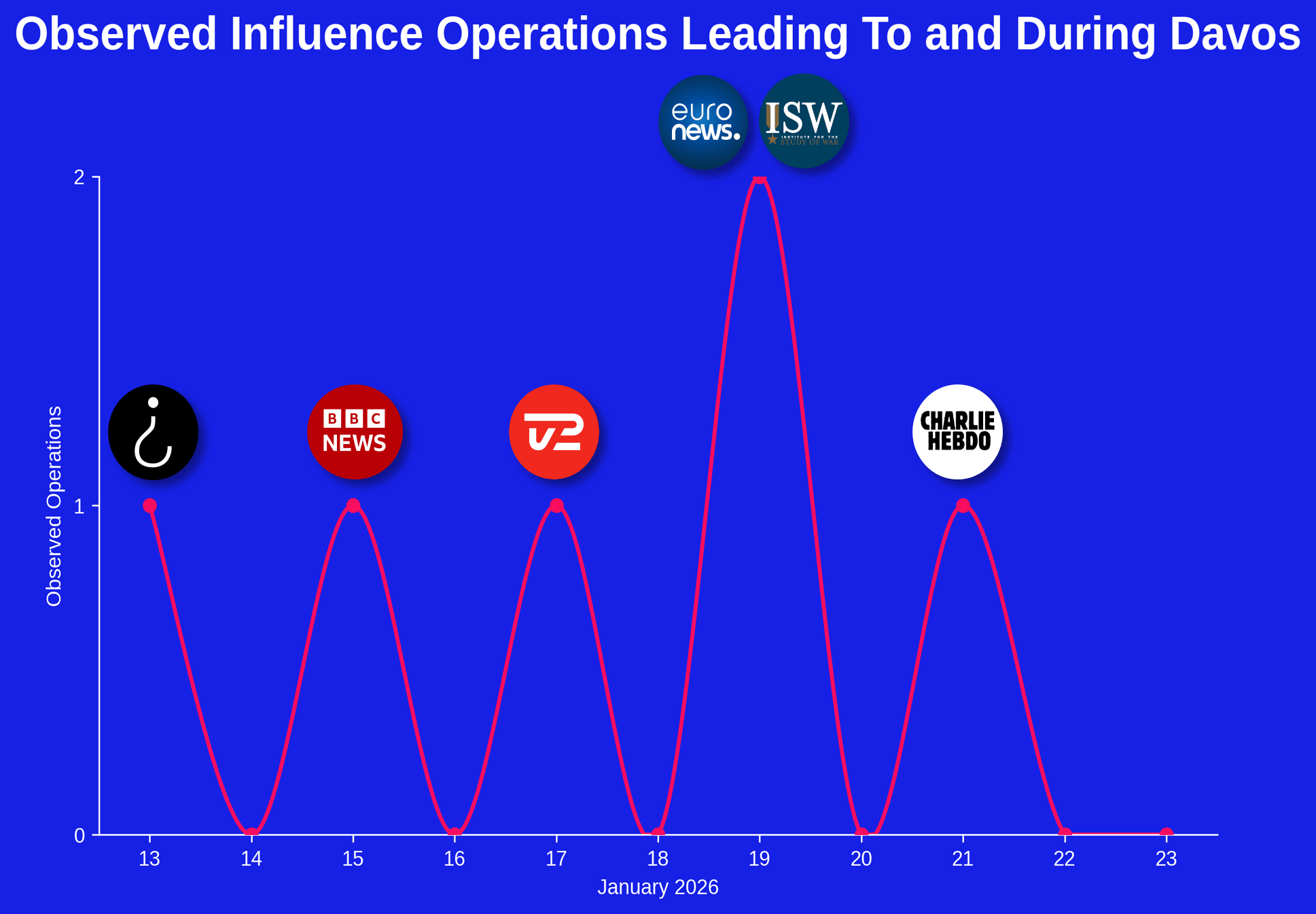
Fig 9. Observed influence operations leading to and during Davos.
More granularly, looking at the period ranging from 13 January 2026 (a week before Davos) to 23 January 2026 (the last day of Davos), SecAlliance observed the following spikes in unique operations:
The deployment of the first operation – the fake Bellingcat video – on 13 January 2026 likely came as a response to Greenland’s government and its Prime Minister firmly rejecting any US takeover of the island, which occurred the previous day. Greenland
reiterated that it is part of the Kingdom of Denmark and that its security is guaranteed under NATO; this operation likely sought to sow confusion around those claims of guaranteed protection from NATO.
The second operation, deployed on 15 January 2026 and purporting to be a BBC video, is also assessed to be reactive. It coincided with Trump’s threatened to impose tariffs on European allies (including Denmark, the UK and others) unless they agreed to US control of Greenland, while European NATO countries deployed forces to support Danish sovereignty and large protests took place in Greenland and Denmark over his demands. Similarly, the falsified TV2 Nord video, deployed on Telegram on 17 January 2026, was likely a reactive operation European leaders and institutions issuing joint and coordinated statements affirming Greenland’s status as part of the Kingdom of Denmark.
The 19 January 2026 operational deployment – that of the fake Euronews and Institute for the Study of War videos – aligned with the start of Davos. This operation was likely preplanned and pushed out to coincide with the large-scale international media coverage that would have been present on that day. The deployment of two distinct operations on this day was almost certainly an effort to flood the information zone with as much noise as possible amidst the increased media coverage. Finally, the last operation on 21 January 2026, involving fake Charlie Hebdo covers was also likely preplanned as it coincided with Trump’s speech on Greenland. In the speech, he reiterated his controversial demand for US control or a negotiated “deal” over Greenland – framed as essential to US and NATO security – while ruling out the use of military force, warning European allies of consequences if they refuse, and at times confusing Greenland with Iceland.
Whilst we can see that the posts were engaged with mostly through likes and reshares, it’s not entirely clear whether these are genuine public interactions or automated through bot accounts. The highest-viewed post in the network was one disseminating the fake Bellingcat video, which received approximately 271,200 views. Despite this reach, there were no comments on the post. The posting account itself also had no followers and followed only the official X account, suggesting this view count could have come from bot accounts forming part of the coordinated inauthentic amplification. This pattern held across most of the network’s posts; high view counts paired with little to no genuine public interaction and accounts with minimal or no followers.
The main exception was on Telegram and VK, where pro-Russian accounts, influencers and inauthentic accounts shared the fake content and generated limited but genuine public engagement.
Compared to Russia’s use of covet influence operations above, Russia’s use of overt influence operations relies on visibility rather than concealment. Senior officials, state diplomats, and government-aligned media openly advance coordinated narratives through press conferences, official statements, and televised commentary, allowing Moscow to shape debate while retaining plausible deniability for anything that may be deployed in covert operations. Overt operations focus on agenda-setting, repetition, and saturation: reframing events, questioning opponents’ legitimacy, and highlighting Western hypocrisy or division. Unlike covert disinformation, overt influence leverages the authority of the Foreign Ministry of Russia and senior figures to normalise contested narratives in plain sight. The goal is not persuasion alone, but confusion, fatigue, and erosion of trust in institutions, leaders, and shared facts over time.
Russian President Vladimir Putin has stated that who owns Greenland “is not a matter of concern for Russia” and that the US and Denmark should resolve it amongst themselves. At the same time, Putin has criticised Denmark’s historical relationship with Greenland as colonial and harsh, and he speculated about Greenland’s “value” in historical terms by comparing it with the Alaska purchase in 1867 – an effort to normalise the concept of buying territory and to show Russia as cool-headed and pragmatic. Putin’s angle is to posit Russia as neutral, uninterested in acquiring Greenland itself, and seeing the dispute as an internal Western matter – but is equally keen to highlight European disunity and weaken NATO political cohesion.
Russian Foreign Minister Sergei Lavrov has stated that Greenland is not “a natural part” of Denmark historically, framing it as a colonial legacy rather than an inherent territorial bond. He dismissed Western claims that Russia is plotting to seize Greenland, stating that Russia has no plans to take it and that the US knows this, directly pushing back on US national security narratives that cite Russia as a threat in the Arctic. Most concerningly, Lavrov has drawn a parallel between discussions over Greenland and Russia’s annexation of Crimea, implying Western double standards on territorial sovereignty. Similarly to Putin, Lavrov has also worked to downplay the Russian threat and interest and also challenge Western moral authority and use historical/colonial framing to deflate Western claims.
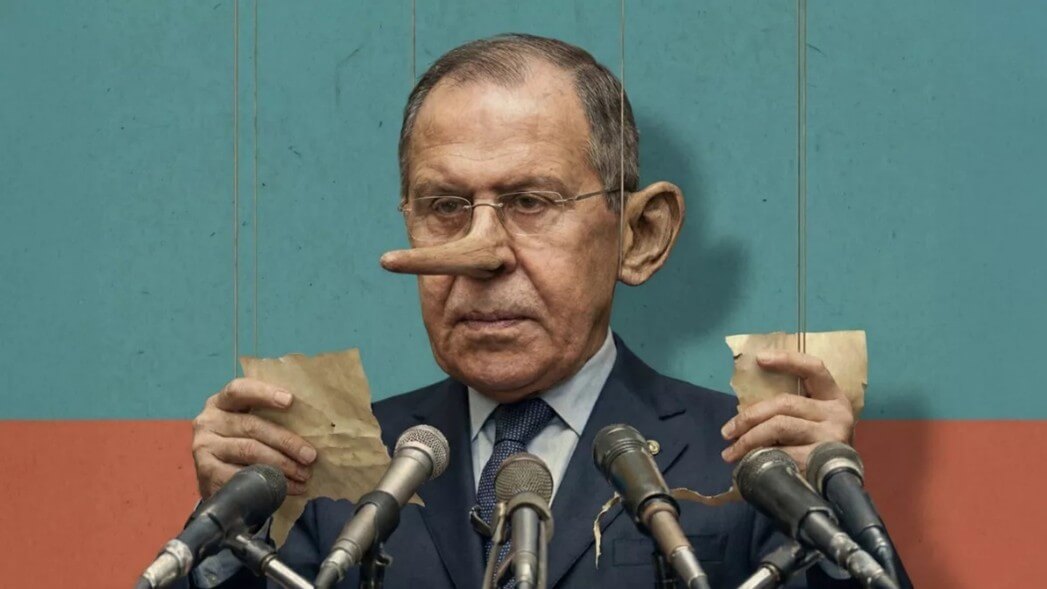
Fig 10. EU vs Disinfo’s image of Russian Foreign Minister, Sergei Lavrov.
Comparatively, Foreign Ministry Spokeswoman Maria Zakharova has been much looser with her criticism of the West in this context, as is her traditional role as mouthpiece of the Kremlin. Zakharova has publicly mocked Western and Nordic commentary on Greenland, calling some critiques “nonsense” and offensive when Western leaders mention Russia in Greenland discussions. Her messaging often shifts the focus from the substance of the issue to ridiculing Western positions and highlighting perceived Western hypocrisy or absurdity. Zakharova’s unique position as an unelected but still respected governmental mouthpiece allows her to speak more candidly about the Kremlin’s position, in this case ridiculing and deflecting, inviting Western actors to self-criticise, and undermine the credibility of the US and its allies.
There is evidence that Russian state or pro-Kremlin media have been directed to intensify coverage of the Greenland issue with specific narratives favourable to Moscow’s geopolitical goals. Meduza, a prominent a Russian and English-language independent news website, reported that state-aligned media outlets have received informal editorial instructions to:
· Emphasise NATO’s internal divisions and frame the Greenland dispute as evidence that the alliance is fractured;
· Boost Putin’s image as a leader “forcing America into equal dialogue” while portraying European responses as weak or inconsistent;
· Quote Lavrov’s scepticism of NATO’s future and call the situation the “Greenland drama”; and
· Highlight potential economic and geopolitical downsides for Europe (e.g., alleged harm to Germany’s economy) [source].
Outlets such as RIA Novosti and known Kremlin disinformation outlets such as Pravda are echoing these frames, suggesting Trump is “copying Putin” or warning that the dispute could presage NATO’s collapse. Independent media monitoring also notes mocking and dismissive coverage of NATO’s increased Arctic presence [source]. Russia’s media often downplays or satirises Western military moves in Greenland while emphasising alleged cracks within the alliance.
Overall, Russia’s response to the Greenland issue follows a familiar, coordinated pattern. Officials present formal neutrality, insisting Greenland is Denmark’s matter, while simultaneously reframing the debate through colonial history and Western double standards to weaken Europe’s moral authority. The issue is used less to stake a position than to highlight and amplify divisions between the U.S. and Europe, portraying NATO as fragmented and strategically adrift. By dismissing any Russian threat narrative, Moscow casts Western concerns as exaggerated or hysterical. Parallel media coverage seems not spontaneous but coordinated around Kremlin talking points – pro-government outlets are actively shaping narratives aligned with official positions.
Taken together, the Greenland disinformation campaign bears the hallmarks of a Russian state-linked influence operation, even in the absence of a single “smoking gun”. Attribution rests instead on a convergence of indicators: the systematic impersonation of trusted Western media and research institutions, the rapid amplification through bot-like account clusters, pro-Kremlin Telegram channels and news outlets, the reuse of known Russian disinformation brands such as fake Charlie Hebdo covers, and the close narrative alignment with official Russian messaging. These techniques, targets, and dissemination pathways closely mirror patterns observed in earlier Kremlin-linked operations since 2014, allowing attribution to Russia with high confidence.
The campaign fits squarely within Russia’s established doctrine of combined covert and overt influence operations. Covertly, fabricated content and manipulated media are deployed to launder falsehoods into the information environment, eroding trust in journalism, fact-checkers, and allied governments. Overtly, senior figures such as Vladimir Putin and Sergei Lavrov reinforce complementary narratives in plain sight: professed neutrality, accusations of Western hypocrisy, and repeated emphasis on NATO’s internal divisions. The two strands are mutually reinforcing, creating ambiguity, fatigue, and confusion rather than attempting to persuade through a single coherent argument.
Crucially, this operation is best understood as opportunistic rather than bespoke. The Kremlin did not create the Greenland controversy; it exploited it. Pre-existing disinformation infrastructure – bot networks, forged-media templates, Telegram channels, and the Pravda-style amplification ecosystem – was rapidly repurposed to capitalise on a moment of geopolitical tension and heightened media attention around Davos. This ability to plug new narratives into standing influence frameworks
underscores a core strength of Russian information operations: speed, adaptability, and the capacity to turn almost any Western political dispute into a tool for strategic disruption.
Within the Fusion Team at SecAlliance, we use real-time alerting and AI integrated tracking tools to detect narrative attacks early, so our clients can act before the damage is done.
We actively monitor:
· State-run and hostile foreign media outlets;
· Known disinformation domains and bot networks;
· Keyword patterns linked to common disinformation narratives and;
· Sentiment spikes and coordinated messaging signals.
Disinformation is evolving fast. We're here to help you stay ahead of it.
For details on our disinformation detection services, please contact info@secalliance.com.


