Plastic Warfare: How AI-Generated LEGO Videos are Reshaping Influence Operations in the Iran Conflict
Published by:
Natasia Kalajdziovski
Published on:
April 20, 2026
Stay Ahead in an Emerging Threat Landscape
SecAlliance's Disinformation Monitoring and Managed Cyber Threat Intelligence services provide continuous visibility into narrative-based threats, including the detection of coordinated campaigns, early identification of emerging content targeting clients, and structured intelligence to support communications and crisis response teams. Learn how we can support your organisation.
Natasia Kalajdziovski, Senior Fusion Threat Intelligence Analyst at SecAlliance, examines how AI-generated content is being used to shape narratives in the ongoing Iran conflict, what it reveals about the evolution of influence operations, and what organisations should consider in response.
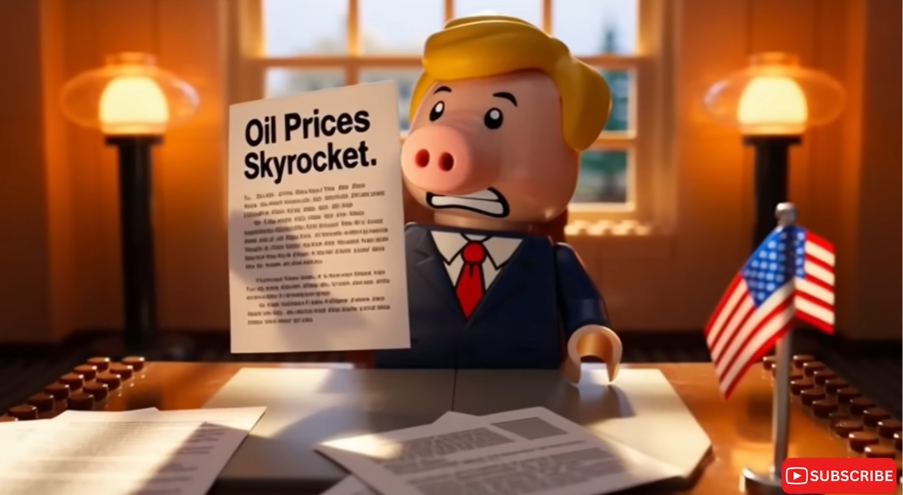
A phone screen lights up somewhere far from the strike itself. On it, Donald Trump appears in plastic form: square-jawed, bright-faced, absurd. A missile arcs overhead in the visual language of a toy box. A city burns cleanly, almost neatly. The rubble is stylised, the dead are implied, and the war has been rendered in primary colours. By the time the viewer has watched for fifteen seconds, the scene has already done its work. The villain has been identified. The victim has been chosen. The moral has been delivered. Meanwhile, elsewhere in the actual conflict, somebody is scrolling through footage that is not stylised at all.
This is now part of the language of war.
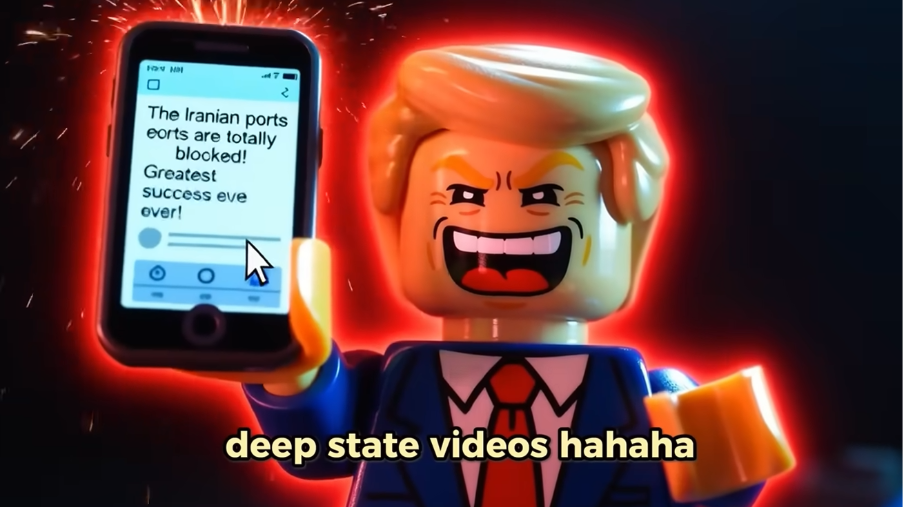
One of the more curious developments to emerge from the current Iran conflict has also proven to be one of the more analytically revealing. Alongside the expected churn of official statements, military footage, diplomatic briefings, and the usual wreckage of digital propaganda, a stream of AI-generated LEGO-style videos has circulated across TikTok, X, Instagram, Telegram, and YouTube.
Much of the reporting has centred on a group known as Explosive Media, also referred to as Akhbar Enfejari or “Explosive News”, whose clips mock Trump, ridicule the United States and Israel, and frame Iran through the language of injury, resistance, and justified reprisal. These videos have been described by multiple outlets as among the most recognisable digital artefacts of the conflict, accumulating millions of views and spreading well beyond explicitly pro-Iranian audiences.
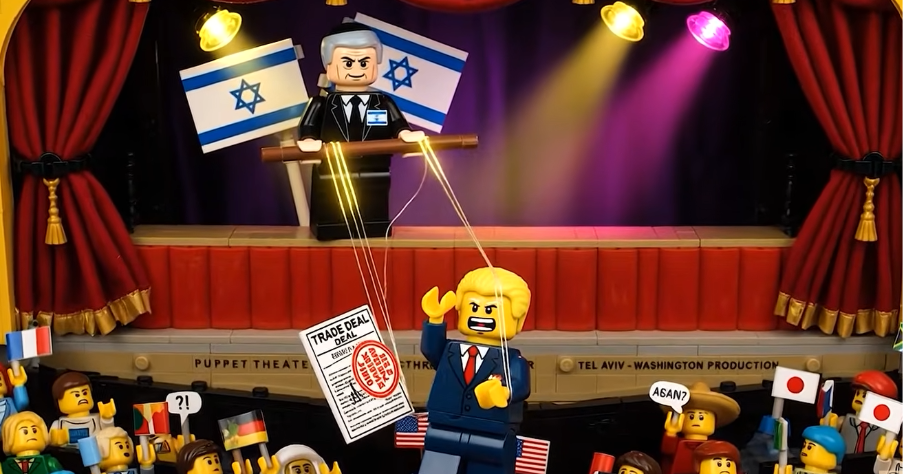
Fig 1. “NEW LEGO DISS FROM IRAN 🔥| EPSTEIN FILES & THE CLOWN 🤡” [source]
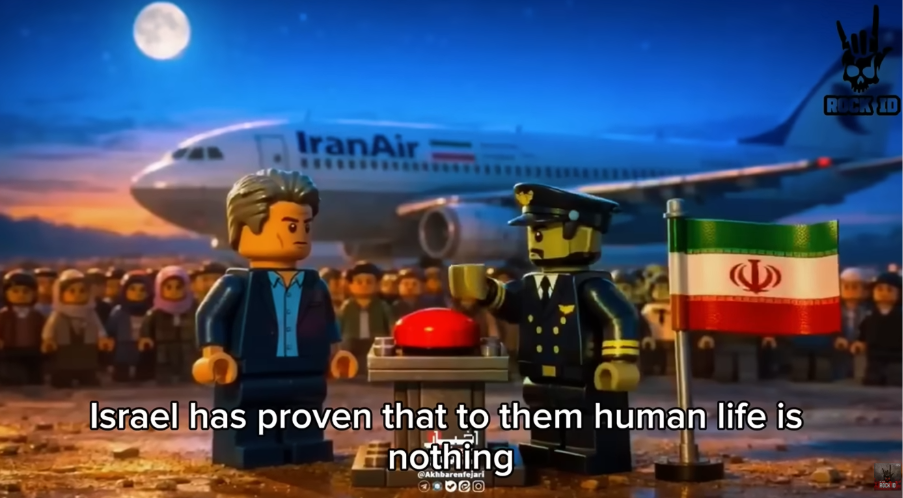
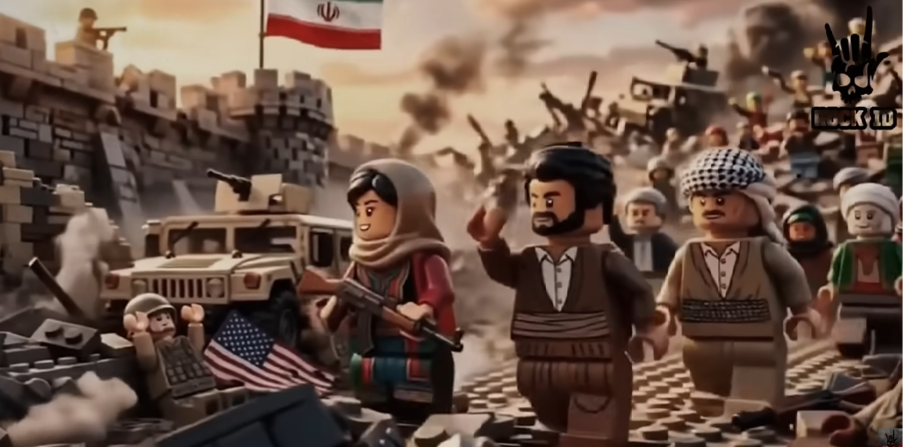
At first glance, the format looks unserious, even ridiculous: Trump and Netanyahu as minifigures; aircraft, missiles, and bombed-out streets reconstructed through the visual logic of children’s play; scenes of civilian harm translated into something memeable, shareable, and grotesquely easy to consume. Yet it is precisely in that absurdity that the analytical value lies. The format does not trivialise the conflict so much as it repackages it for frictionless circulation.
War, in this telling, does not arrive as communique. It arrives as content.
That matters because these videos are not simply novelty propaganda, nor are they merely another expression of what has come to be dismissed as “AI slop”. Rather, they sit more culturally fluent, and far better adapted to the conditions of an entertainment-first information environment. They do not need to conceal their politics in order to be effective. On the contrary, their politics are often brazen. What they do instead is camouflage persuasion inside the visual language of the feed. They arrive looking unserious, and that is precisely why they travel.
Aesthetic Softening and the Platforming of War
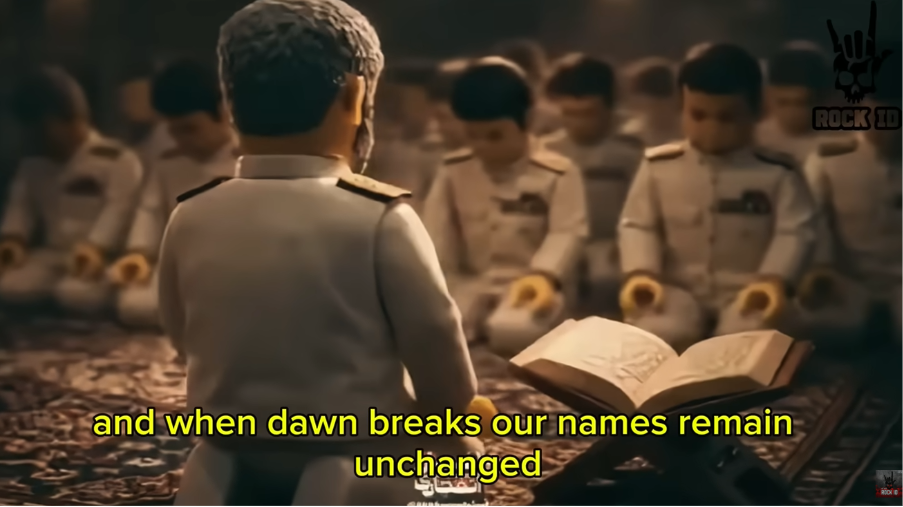
The first point to establish is that the LEGO format is not incidental. It performs a specific communicative function. War, when rendered through plastic minifigures and toy-like destruction, becomes abstracted without becoming meaningless. The violence remains; what changes is the viewer’s relationship to it. The format removes some of the immediate revulsion that attends more realistic imagery but preserves enough emotional and symbolic weight to carry blame, mockery, outrage, or moral inversion. In effect, the videos soften the visual field while hardening the narrative payload.
This is one reason the format travels so well. Short-form platforms need immediacy, legibility, novelty, and emotional clarity. The viewer must understand quickly who is being mocked, who is being valorised, and what emotional response is being invited. Explosive Media’s clips do this with considerable efficiency. Reporting in The Verge and WIRED repeatedly returns to the same point: the videos are simple, usually distinctive, culturally literate, and tuned into the kinds of references that resonate with global – especially younger – online audiences.
If that sounds frivolous, it should not. Propaganda does not always weaken when it becomes ridiculous. Sometimes it becomes more efficient. What looks unserious on the screen can still do serious narrative work.
Themes, Narratives, and the Construction of Moral Legibility
The narratives carried by these videos are not especially novel. Their novelty lies in mode and distribution rather than substantive theme. Across the most visible examples, the core architecture is relatively consistent:
Iran is framed as resilient, wronged, and ultimately justified.
The United States and Israel are framed as hypocritical, overextended, or morally culpable.
Western military power is depicted not only as violent, but as wasteful, performative, and at times absurd.
Civilian harm is deployed selectively, not as a universal tragedy but as an accusatory device which fixes responsibility on adversaries.
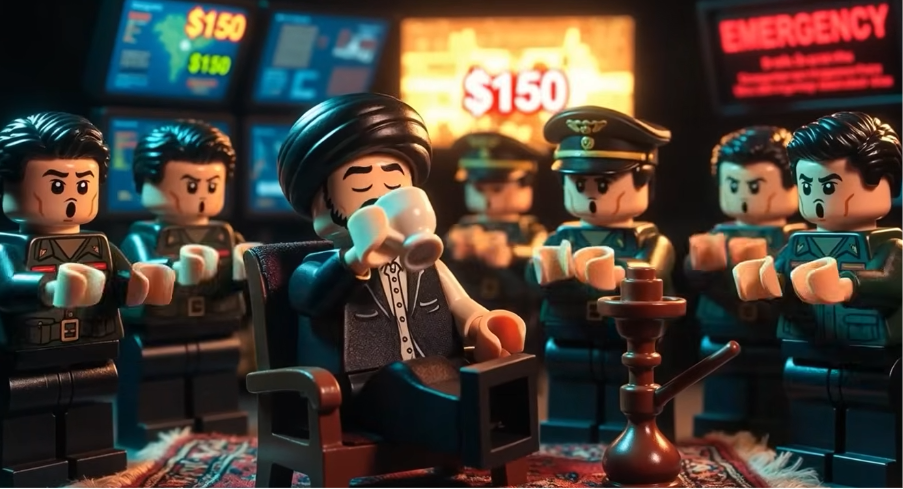
Fig 2. “IRAN JUST ANSWERED USA BLOCKADE IN THE GULF 💀 - LEGO EDITION” [source]
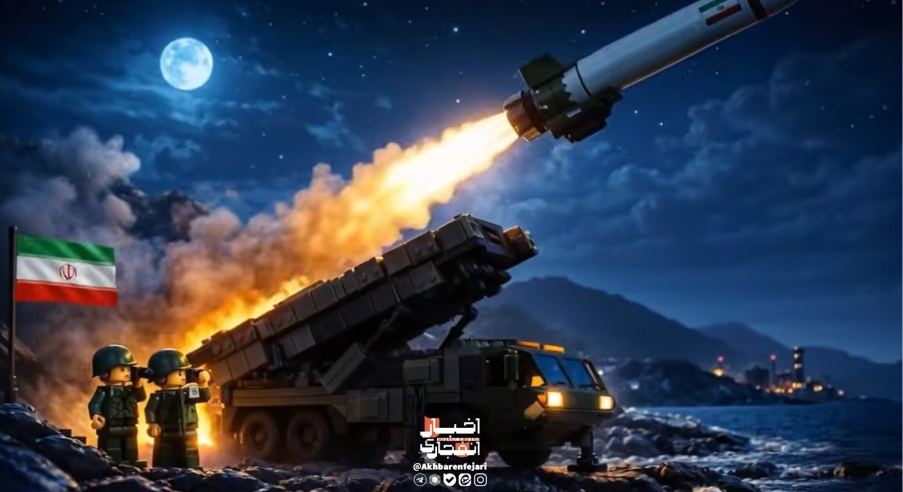
This is where the videos begin to matter analytically. They convert complex conflict realities into a sequence of legible moral scenes. One does not need to know the finer points of escalation control, Iranian domestic politics, Israeli strategy, or US force posture in the region to consume them.
The themes are stripped to the essentials – humiliation, resistance, blame, hypocrisy, revenge, sacrifice. That simplification is not a defect in the format. It is its utility. In the influence context, one is not always trying to produce a deep understanding. One is more often trying to fix an interpretive frame before more complex analysis has time to take hold.
War, once filtered through the feed, does not become less political. It becomes more consumable.
Fig 3. “IRAN WAR - LEGO FILM: COME CLOSER” [source]
Trump as a Narrative Vehicle
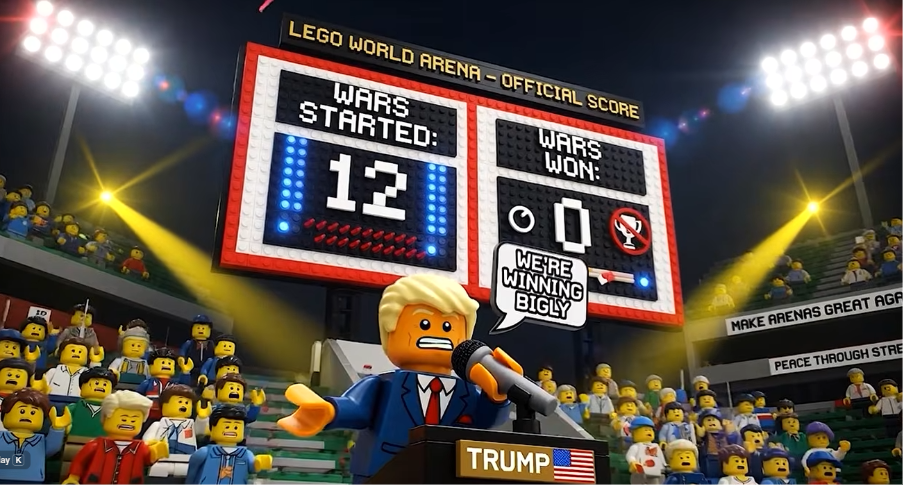
Within this architecture, Trump appears not merely as a recurring character but as one of the principal narrative vehicles through which the content operates. This is unsurprising. Few political figures are as globally legible, as instantly caricatured, or as algorithmically combustible. Trump functions here at several levels:
As the face of American force
As an object of ridicule
As a symbol of strategic incompetence
As a useful bridge into Western political discourse more broadly
The result is that a video nominally about the Iran conflict can circulate well beyond conflict-attentive audiences simply because it is also, recognisably, a video about Trump.
Fig 4. “NEW LEGO DISS FROM IRAN 🔥| EPSTEIN FILES & THE CLOWN 🤡” [source]
That helps explain why the content has moved so effectively. A clip that humiliates Trump may simultaneously reinforce Iranian legitimacy, energise anti-war sentiment, and travel into US political discourse on grounds that are not, at least initially, about Iran at all. The narrative does not always move directly. It often moves by attaching itself to already violative symbolic material, like the Epstein allegations.
Plastic, in other words, has become a delivery system.
Fig 5. “TRUMP AND IRAN CEASEFIRE - WORLD AT CHAOS- LEGO IRAN ANIMATION” [source]
Explosive Media and the Attribution Problem
It is in the attribution space that the case becomes most interesting. For some time, the central question was whether these videos were simply the work of diffuse individuals using accessible AI tools, or whether a more structured actor sat behind at least part of the ecosystem.
The reporting now permits a firmer answer. Explosive Media is not an inferred entity but a publicly visible one. AP, WIRED, The Verge, and The New Yorker all identify Explosive Media or Akhbar Enfejari as a key producer of the LEGO-style clips. The New Yorker describes the videos as “inescapable artefacts” of the conflict and reports that they have been shared by Iranian-government accounts and promoted by Russian state media.
That pushes the analysis beyond the purely lone-actor model. We are no longer dealing only with isolated creators improvising from the margins.
At least part of the ecosystem is being produced by a branded, semi-organised actor with narrative discipline, visual consistency, and a clear instinct for virality. The group has publicly described itself, in various interviews, as independent and activist-led; The Verge reported that it presented itself as a team using generative AI deliberately to communicate with global audiences, while AP reported that it described itself as an independent group of Iranians creating content from inside Iran.
Fig 6. “THE GENOCIDE THAT IS NOT OVER | IRANIAN LEGO WAR-THEMED VIDEO” [source]
What this does not fully establish is formal state control. On that point, the public record remains more suggestive than conclusive. WIRED notes that the group denies direct ties to the Iranian government, while AP reports that its content has nevertheless been amplified by Iranian state media and that analysts view the sophistication and operating conditions of such output inside Iran with suspicion.
Taken together, the most persuasive reading at present is not “state” or “not state,” but something more hybrid and more plausible: Explosive Media appears to occupy a para-state or semi-organised position within a broader pro-Iran information ecosystem, close enough in narrative terms to be useful, visible enough to be amplifiable, and sufficiently distinct in formal terms to preserve deniability.
The state no longer needs to own the message in order to benefit from its spread.
Weaponisation Without Ownership
In earlier conflicts, propaganda sought authority. In this one, it seeks shareability.
One of the most important features of the present influence environment is that strategic utility no longer requires direct authorship. Content can be weaponised without being owned.
A semi-independent group produces material; aligned networks amplify it; state-linked channels recirculate what works; the origin story remains formally blurred even as the narrative effect becomes clear. In earlier periods, this might have been treated as an attribution weakness. In the current one, it is better understood as a design strength.
The advantages are obvious. It lowers the production burden for the state. It allows for rapid experimentation outside bureaucratic structures. It preserves plausible deniability. And it lets the content appear more native, more cultural, and therefore more authentic than official messaging typically does.
Fig 7. “🔥A BROKEN SYSTEM | THE SONG THAT SHOCKS THE WORLD” [source]
Fig 8. “UNTIL THE BLOOD IS OUT 🔥 | WE STILL STAND | EPIC IRANIAN LEGO ANIMATION” [source]
Clips of the LEGO videos were shared by Iranian-government accounts and promoted by Russian state media. That is enough to show that whatever Explosive Media’s formal status may be, its content is already operating inside a wider ecosystem of reinforcement.
Overt Influence in a Hybrid Environment
The videos themselves are plainly overt. Their narratives are explicit, their bias visible, and their intention persuasive rather than covertly deceptive.
Yet the environment through which they travel is more hybrid than the old overt/covert distinction comfortably allows. Content may be openly partisan while still benefiting from semi-coordinated amplification, state-adjacent endorsement, or algorithmic uplift produced by ideological communities. Iran’s broader digital messaging during the conflict has been described by AP, The Guardian, and The Verge as unusually agile, culturally aware, and well suited to exploiting exactly those dynamics.
That is also why the lone-actor question matters, but only up to a point. Even if some portion of the ecosystem is genuinely independent; the larger structural effect remains the same.
Contemporary influence is increasingly decentralised at the point of production and increasingly networked at the point of amplification. What once required a ministry, a broadcaster, or a formal propaganda apparatus can now be accomplished by a small team with cheap generative tools, a strong political instinct, and an intuitive grasp of what will travel online.
Conclusion
The significance of AI-generated LEGO videos in the Iran conflict is not that they are unprecedented in substance. Resistance narratives, enemy ridicule, moral inversion, and political caricature are as old as propaganda itself. What is new is the language through which those themes are being expressed, and the information environment through which they move.
Explosive Media has emerged as the clearest identifiable node in that system: not conclusively a formal state arm, but far too organised, too aligned, and too effectively amplified to be dismissed as mere internet ephemera.
If there is a broader lesson to be drawn from this case, it is that influence in modern conflict no longer requires the old aesthetics of authority. It may, in fact, work better without them. The most effective propaganda in this instance has not looked official, solemn, or even especially serious. It has looked plastic, absurd, and entirely at home in the feed.
That, more than the LEGO figures themselves, is what makes this phenomenon worth taking seriously.