Beyond the Stadium: Executive Protection at the 2026 FIFA World Cup
Published by:
Natasia Kalajdziovski
Published on:
June 11, 2026
Stay Ahead in an Emerging Threat Landscape
SecAlliance's Disinformation Monitoring and Managed Cyber Threat Intelligence services provide continuous visibility into narrative-based threats, including the detection of coordinated campaigns, early identification of emerging content targeting clients, and structured intelligence to support communications and crisis response teams. Learn how we can support your organisation.
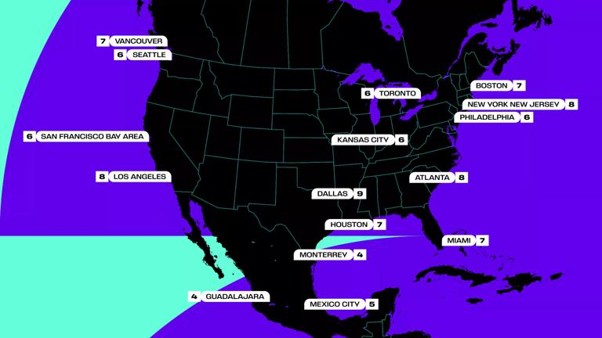
The 2026 FIFA World Cup will be one of the most complex sporting events ever staged. Hosted across Canada, Mexico and the United States, it will bring together 48 teams, 104 matches and more than a month of sustained global attention. The obvious security focus will be on stadiums, teams, public spaces, transport hubs and mass gatherings. That is understandable. Major tournaments are, by their nature, public safety operations.
But for executives attending the competition rather than participating in it, the more interesting risk picture sits elsewhere.
Senior corporate figures, board members, sponsors, investors, celebrities, family offices and high-net-worth guests will move through the tournament in ways that are both highly visible and unevenly protected. They may sit in VIP areas, attend sponsor events, stay in luxury hotels and travel with private security. They may also move through airports, restaurants, fan zones, after-parties, road closures, protest areas and unfamiliar cities with a degree of exposure that is easy to underestimate.
The issue is not whether the World Cup will be secured. It is whether executives understand where that security ends.
For high-profile attendees, protection is not only a question of physical safety. It is also a question of symbolism. An executive at a global sporting event is rarely just an individual spectator. They may be read as the face of a company, a sector, a sponsor, a country, a political position or a perceived grievance. That matters because the risk does not always come from who the executive is personally. It may come from what others believe they represent.
This is the protective intelligence problem of the World Cup: not simply the security of the tournament itself, but the exposure created around it.
Major sporting events create an understandable sense of assurance. Stadiums are controlled. Accreditation is managed. Police deployments are visible. Transport plans are built around expected crowd flows. Host cities prepare for public order, emergency response, fan behaviour and disruption. For many attendees, particularly those entering through VIP or hospitality routes, the environment can feel highly managed.
But the existence of a security architecture should not be confused with personal protection.
The security bubble around a tournament is designed to protect the event. It is not necessarily designed around the specific risk profile of each executive who attends it. It will prioritise crowd safety, venue security, team protection, emergency response and the integrity of the competition. Those are substantial responsibilities. But they do not automatically account for the exposure created by a named individual’s wealth, role, affiliation, itinerary, family members, public profile or symbolic value.
Executives are often most exposed in the spaces between formal security arrangements. The hotel lobby before departure. The restaurant after the match. The walk from a hospitality venue to a vehicle. The delayed arrival at a congested airport. The informal drink after a corporate reception. The photo taken by a fan. The LinkedIn post announcing attendance. The family member who posts in real time from a recognisable location.
These are not dramatic scenarios. They are ordinary ones. That is precisely why they matter.
Protective intelligence is often most valuable where routine behaviour becomes predictable behaviour. At a tournament of this scale, executives may follow highly visible patterns: flying into host cities before key matches, staying in premium hotels, attending sponsor receptions, using private transport, visiting fan zones, and appearing at events where their presence has commercial value. None of these activities is inherently unsafe. But each one can create exposure when combined with public attention, hostile interest or poor information control.
The question is not simply whether an executive is safe inside the venue. It is whether the full pattern of attendance has been understood.
The Executive as Spectator, Symbol, and Target
The World Cup is not only a sporting event. It is a global stage on which politics, identity, commerce and grievance are performed.
Executives attending the tournament may be present as fans, but they are unlikely to be seen only as fans. Their attendance may be interpreted through the lens of the company they lead, the sector they represent, the government contracts they hold, the country they are associated with, the causes they have supported, or the controversies attached to their brand. At an event watched globally, visibility becomes a form of exposure.
This is particularly relevant for executives linked to sectors that already attract scrutiny: energy, defence, technology, finance, extractives, infrastructure, gambling, surveillance, aviation, logistics, media, pharmaceuticals or luxury goods. It may also apply to executives from companies involved in sponsorship, broadcast rights, construction, security, data management, hospitality or major event delivery. In some cases, the executive may not be controversial at all. The organisation, sector or national context may be enough.
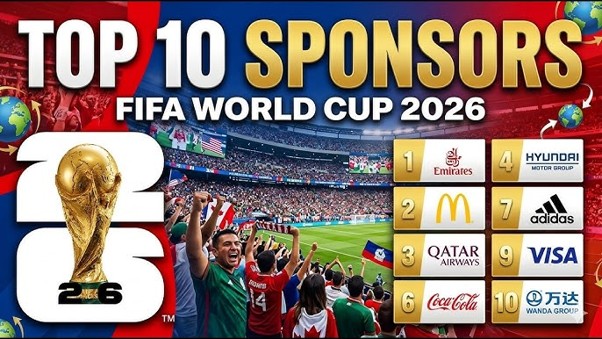
List of some of the FIFA World Cup 2026sponsors – attending executives may be linked to their company’s sponsorship [source]
The risk does not always come from the executive’s actions. It can come from the meaning attached to their presence.
A photograph at the wrong event, with the wrong individual, in the wrong context can become reputationally significant. A corporate guest appearance can be reframed as political endorsement. A sponsor reception can be used to support a narrative about hypocrisy, exploitation or complicity. An executive’s presence in a host city can attract protest, harassment or online attention because it offers a visible and emotionally resonant target.
This is not to suggest that every executive attending the World Cup will face a serious threat. Most will not. But protective intelligence should be concerned with exposure and consequence, not only probability. A low-likelihood incident can still have a high impact if it involves a senior figure, unfolds in public and is amplified online before the organisation has had time to understand what has happened.
That is the point many organisations miss. The relevant question is not only, “Is this likely?” It is also, “What happens if this becomes visible?”
Global Sporting Events Compress Grievances
Major tournaments draw people together. They also draw grievances together.
The immediate atmosphere around the World Cup will be celebratory, but the wider information environment is unlikely to be neutral. Sporting events of this scale attract debate about policing, migration, public spending, sponsorship, corruption, labour, inequality, environmental impact, nationalism and geopolitical conflict. They also bring rival fan groups, activist networks, political movements, commercial interests and hostile narratives into the same physical and digital space.
For executives, this creates a layered risk picture. The threat is not limited to terrorism or serious organised crime, although both remain relevant considerations in major event security planning. It also includes protest disruption, reputational targeting, hostile surveillance, harassment, doxxing, fraud, impersonation, opportunistic criminality and online-to-offline escalation.
The most important point is that these risks do not exist in isolation.
A protest outside a hotel may become a reputational issue if an executive is filmed responding badly. A social media post may become a physical security issue if it reveals a location in real time. A corporate hospitality event may become a digital targeting opportunity if guest lists circulate. A politically charged match may become a risk multiplier if an executive is visibly associated with one side, one sponsor, or one national position. A minor confrontation may become a crisis if it is clipped, captioned and distributed through hostile networks before context can catch up.
This is where traditional executive protection and strategic intelligence need to meet. Close protection may manage the immediate physical environment. Protective intelligence should help identify why that environment may become hostile in the first place.
That distinction matters. A bodyguard can move an executive away from a crowd. Intelligence should help explain why the crowd was there, whether the executive was likely to be recognised, whether hostile mobilisation was occurring online, and whether the incident is likely to become part of a larger reputational narrative.
The Grey Space Around Corporate Hospitality
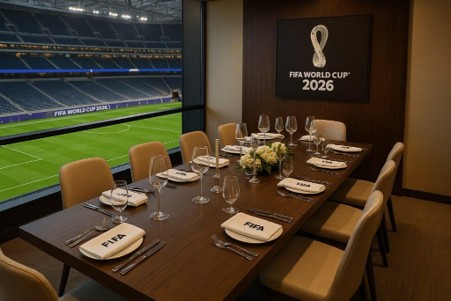
Corporate hospitality at the FIFA WorldCup 2026 [source]
Corporate hospitality is often treated as a controlled environment. In some respects, it is. Guest lists are managed, venues are selected, credentials are issued and access is restricted. But from an executive protection perspective, hospitality also creates a grey space between personal travel, public event attendance and commercial visibility.
The executive may not be travelling as part of an official delegation. They may not be covered by the same arrangements as teams, government figures or tournament officials. Their attendance may be arranged through a sponsor, client, partner, private concierge, family office or internal events team. Responsibilities may be split between corporate security, executive assistants, travel providers, local fixers, event organisers, hospitality providers and personal staff.
That fragmentation creates risk.
Who knows the itinerary? Who has access to the guest list? Has the hotel been publicly disclosed? Are family members travelling? Are movements being posted in real time? Are vehicles recognisable? Are restaurants and private events being tagged? Has anyone assessed whether the executive’s company, sector or public profile is likely to attract protest or hostile attention in that city? Is there a plan for what happens if an online threat becomes a physical concern?
These questions are basic, but they are often overlooked because the event itself feels prestigious and professionally managed. That can create a false sense of assurance. The fact that a match, suite or reception is secure does not mean the wider pattern of attendance has been assessed.
The most significant risks may sit just outside the formal perimeter: airport arrivals, hotel entrances, transport routes, restaurants, private dinners, public celebrations, sponsor receptions and informal movements between events. These are the spaces where executives are visible, routines become predictable, and responsibility can become blurred.
In protective intelligence terms, the question is not simply “is the venue safe?” It is “what does this executive’s presence reveal, invite or symbolise?”
Digital Exposure Before Arrival
Executives can become targetable before they enter a host city.
A World Cup itinerary does not need to be leaked to become visible. It can be assembled from fragments: a corporate announcement, a sponsor post, a tagged hospitality package, a family member’s Instagram story, a flight pattern, a restaurant booking, a hotel photograph, a LinkedIn update, a media appearance, or a well-meaning comment from an employee.
The more senior the individual, the more meaningful those fragments become.
For most people, posting about travel to a match is ordinary behaviour. For an executive, it may confirm location, timing, companions, interests, wealth indicators and likely movements. If family members are present, it may also expose dependants who are less security-conscious and more likely to post informally. If the executive is associated with a controversial company or sector, the same information can help activists, fixated individuals, criminals or hostile online communities identify opportunities for confrontation, harassment or embarrassment.
Digital exposure also creates opportunities for fraud and impersonation. Major sporting events generate a large ecosystem of invitations, hospitality packages, ticketing communications, travel arrangements and last-minute logistics. That creates ideal conditions for phishing, executive assistant targeting, fake credentialing, fraudulent concierge services and impersonation of event organisers, sponsors or internal staff.
In this context, executive monitoring should not be treated as a purely cyber or reputational function. It is part of the protective picture. Online visibility can shape physical vulnerability, and physical attendance can create online exposure.
The boundary between digital risk and physical risk is not clean. A hostile post can direct attention to a hotel. A leaked image can reveal a credential. A family member’s story can confirm a live location. A false claim can trigger harassment. A protest callout can move from an online channel to a physical gathering. The role of protective intelligence is to identify those connections early enough for the organisation to act.
Protective Intelligence Before, During, and After the Tournament
Treating World Cup attendance as an exposure event rather than a simple business trip requires a structured, intelligence-led protective strategy. To mitigate risks effectively, organisations must integrate threat awareness directly into a three-phase chronological timeline.
1) Phase 1: Before the Tournament (Pre-Travel Preparation)
Prior to departure, protective intelligence focuses on minimising exposure and anticipating targeted threats.
• Profile & Symbolic Risk Assessments: Analyse the executive’s public profile and corporate affiliations. This identifies potential triggers for protest and activist confrontation or symbolic targeting by groups looking to leverage a high-profile sponsor or brand for narrative value.
• Itinerary & Surveillance Mitigation: Map hotels, venues, and transit routes. Identifying choke points and high-congestion zones helps counter hostile surveillance from criminals, paparazzi, or hostile researchers tracking predictable movements.
• Pre-Event Fraud & Digital Hygiene: Establish secure verification channels for invitations and ticketing to block impersonation and ticketing scams. Train executives, families, and staff on social media restrictions to prevent pre-travel doxxing and location exposure.
2) Phase 2: During the Tournament (Active Operations)
Once on the ground, intelligence shifts to dynamic monitoring and real-time threat response.
• Opportunistic Crime Defence: Implement situational awareness protocols in crowded transit hubs, luxury hotels, and stadium environments where high-net-worth individuals are targeted for opportunistic criminality (theft, robbery, and physical tracking).
• Real-Time Digital Monitoring: Monitor social platforms and local forums for real-time location leaks, hostile narratives, or coordinate protests. Immediate detection allows security teams to redirect itineraries before physical safety or reputational targeting escalates.
• Verification of In-Country Communications: Strictly vet spontaneous invitations, change-of-venue notifications, and urgent payment requests to prevent active fraud, phishing, and social engineering attempts leveraging the chaotic tournament environment.
3) Phase 3: After the Tournament (Residual Risk Management)
Exposure does not end with the flight home; threats often manifest after the event concludes.
• Post-Event Narrative & Media Monitoring: Track digital media for delayed information manipulation, selective video framing, or miscaptioned imagery designed to link executives to controversial incidents or paint them as symbols of excess.
• Long-Term Harassment Mitigation: Audit any data leaked during the trip—such as hotel room numbers or flight details—to ensure lingering exposure does not turn into long-term doxxing or digital harassment targeting the executive's home or family.
Where Official Security Ends
The 2026 FIFA World Cup will be secured as a major international sporting event. That does not mean every executive attending it will be protected in the way their individual profile requires.
For high-profile attendees, the risk picture sits beyond the stadium. It sits in the movement between venues, the digital traces left before arrival, the symbolism attached to corporate presence, and the grey space between hospitality, reputation and personal safety.
Executives do not need to be alarmed by this. But they do need to be clear-eyed. At a global sporting event, visibility is not incidental. It is part of the environment. The more visible the individual, the more important it becomes to understand what their presence reveals, what it represents, and where the formal security bubble ends.
Protective intelligence exists to make that visible before it becomes a problem.
{{standout}}
Threat intelligence insights, straight to your inbox
Get practical insights and expert guidance from SecAlliance.